AI UPLOAD
A smarter way to list clothes. This project combines AI, UX and clear design to simplify an everyday task, and give users the feeling that the technology is actually working for them.
Role
UX/UI
Research
Flows
Copy
Company
Plick
Year
07-09/2024
Background & goals
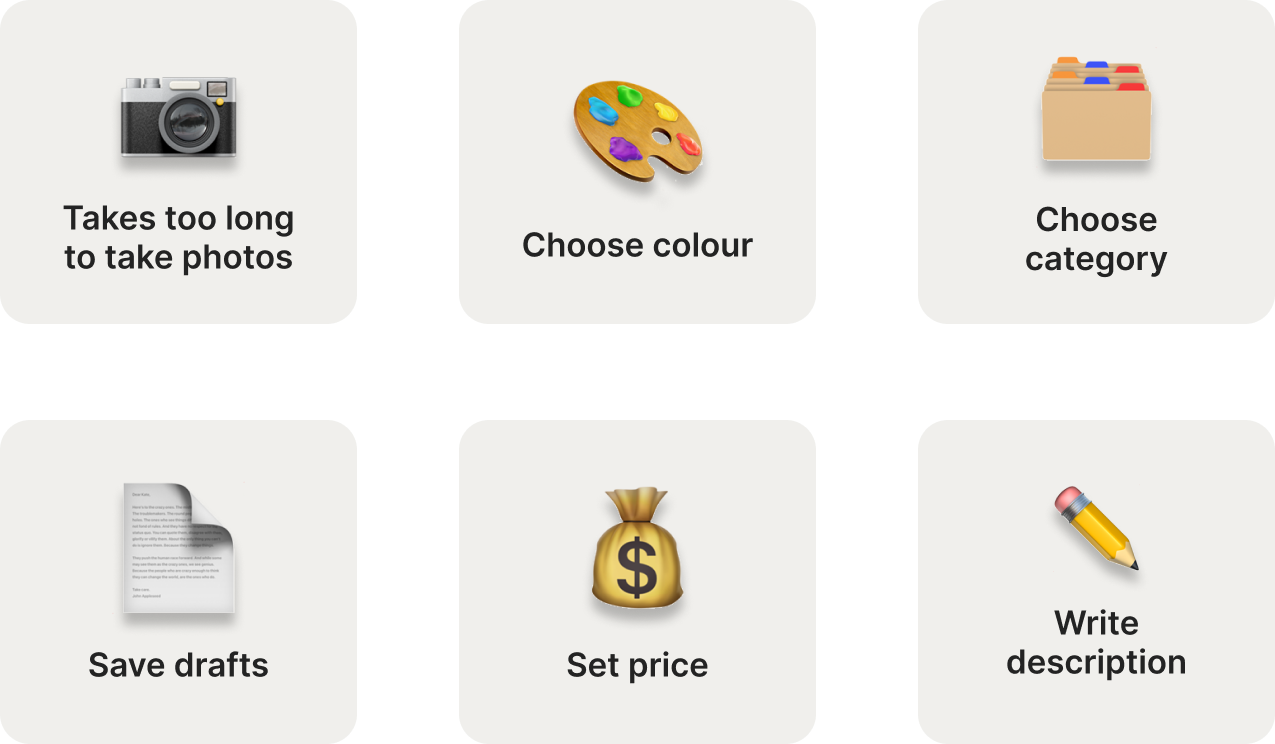
Plick is a second-hand app where users buy and sell clothes. In a survey with 266 responses, we saw that many experienced the listing flow as time-consuming and cumbersome, especially writing descriptions, choosing category, setting colour and price.
The goal was to reduce friction in the listing process and help users with the steps they found most difficult, without taking away control.
We measured success by targeting these KPIs:
Transacted GMV
Listings per week
DAU (Daily Active Users)
Research & insights
We started with an in-app survey to get a broad perspective. The research showed that sellers often upload several listings in a row, don’t want to spend too much time on a single listing, and would gladly get help with description and price. New users needed reassurance – experienced sellers needed speed.
We also saw a clear expectation around photos: many users preferred using their phone’s native camera and gallery instead of the app’s built-in camera. A common behaviour was to photograph items and upload them at different times, and users felt this was faster and more flexible.
Process & collaboration
We worked iteratively in a small team, two UX designers and two developers. I shared responsibility for flow, UI, interaction, research and copy. We sketched, tested, iterated, and finished with a live A/B test.
This is still a living project that we continuously improve based on data and feedback.

The solution
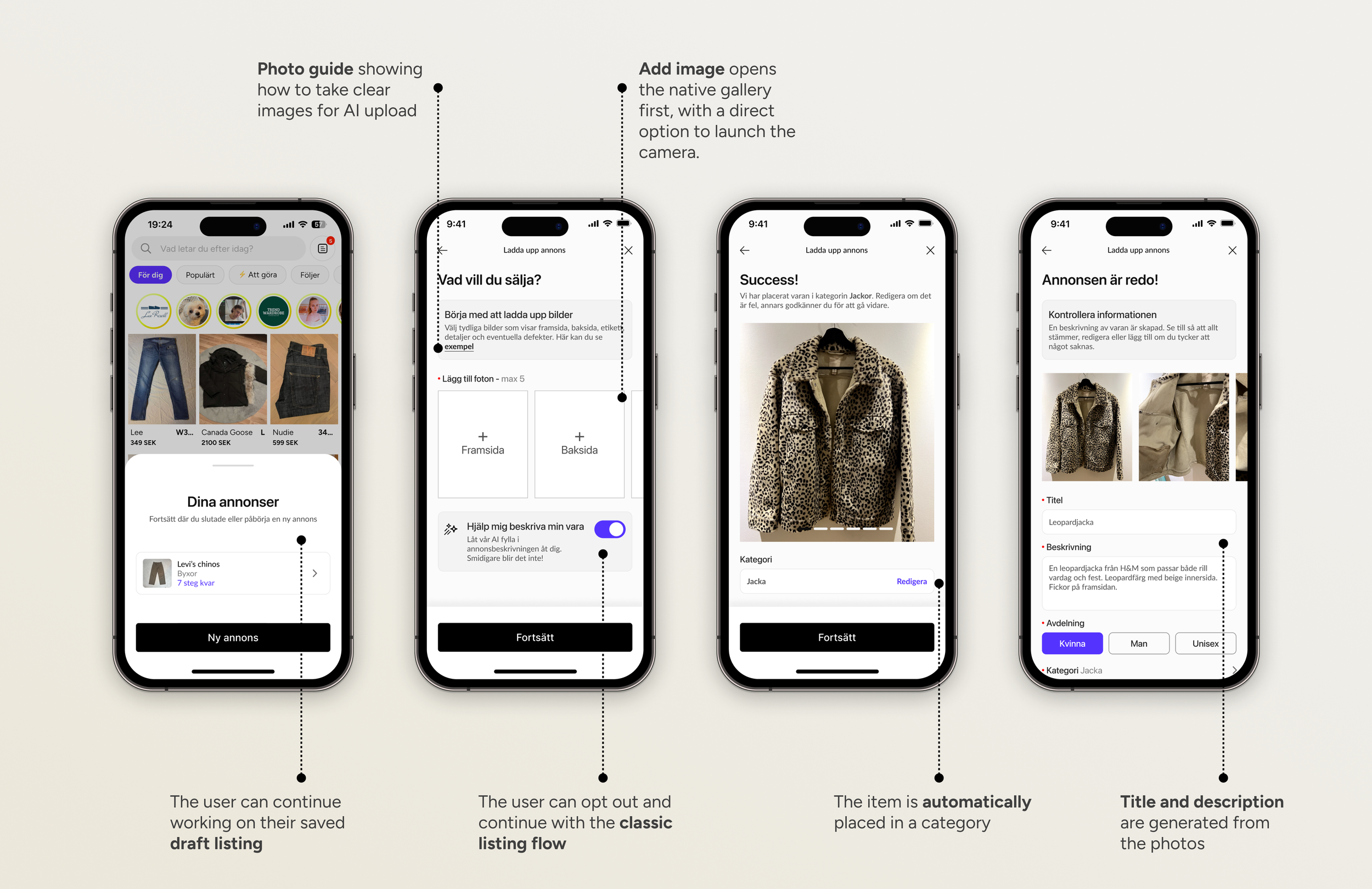
The user can choose AI upload, take photos, and let AI generate title, description, brand, colour and category. The rest is filled in manually, to keep the user in control.
We also changed the photo step so that tapping “add photos” now opens the phone’s native camera gallery instead of the app’s own camera. This matches what users expected, makes it easier to reuse photos they’ve already taken, and supports the common behaviour of shooting items and uploading them at different times.
The feature is complemented by drafts and clear guidance for each step.
Key design decisions
Clear guidance – Text, UI and visual examples showing how to photograph the item (front, back, label, defects).
Transparency – We were explicit about using AI, users perceived it as something modern and positive.
Familiarity – The visuals and flow were built on the existing listing flow to create a sense of safety.
Drafts – If the user closed the listing, they were prompted to save a draft. All drafts are shown in a list with image, category and progress.
Results
The preferred option
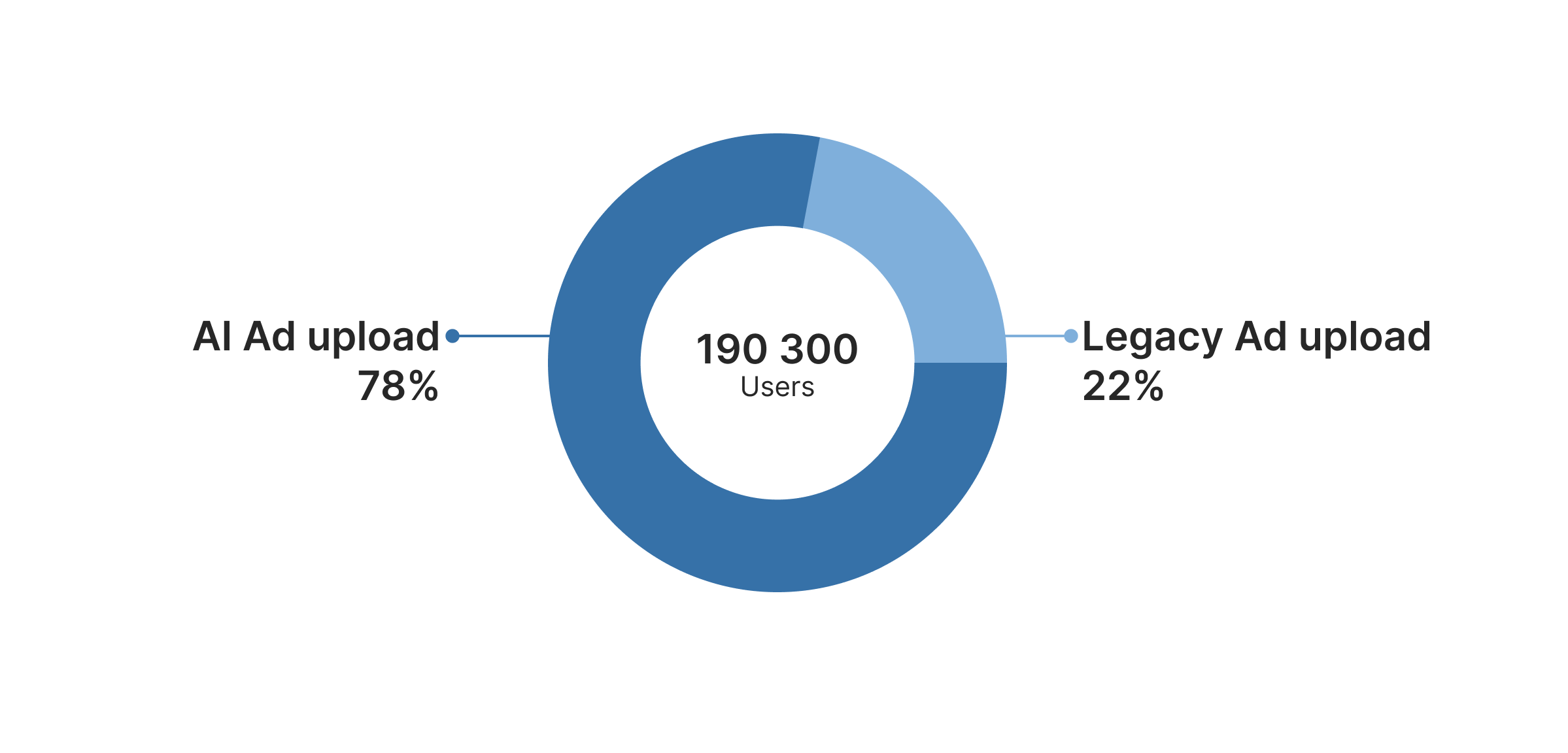
Since launch in October 2024, over 190,000 users have tried AI upload, and today around 78% of all new listings are created with AI.
The feature quickly became the preferred way to create listings.
68% of users who tried AI once continue to use only AI for future listings.
90% use AI for at least half of their listings.
More listings per person
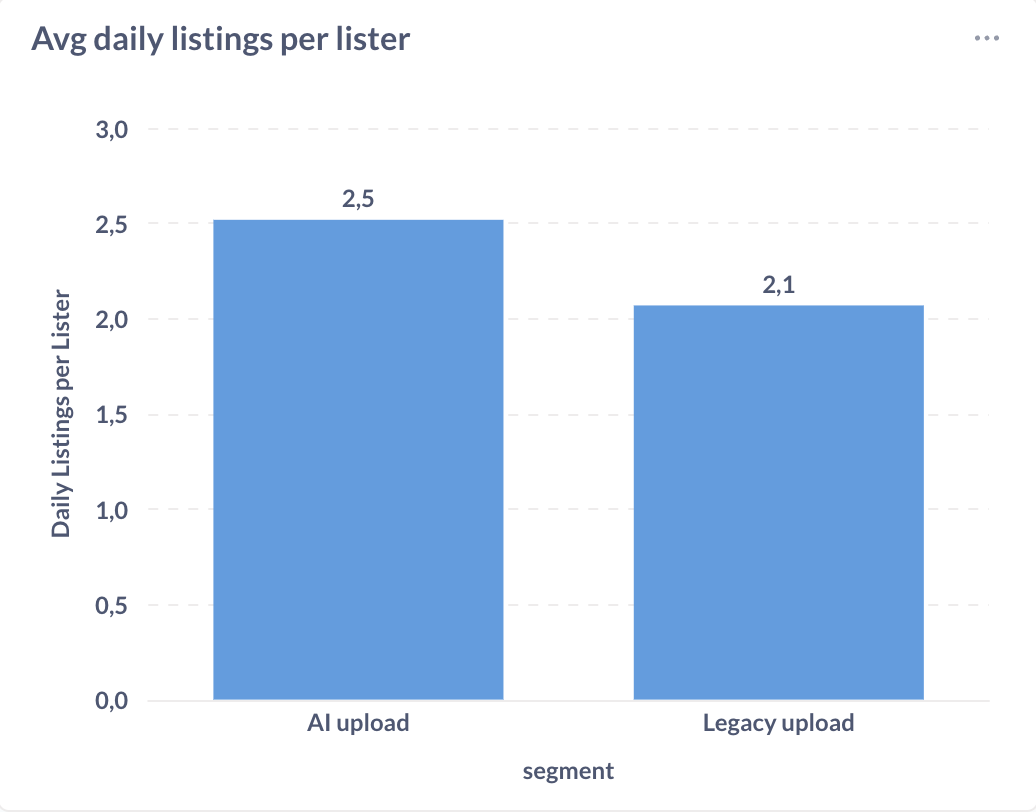
When users get help from AI, they upload more listings per session.
The average increases from 2.1 → 2.5 listings per user – a 19% increase.
That means every fifth user who chooses AI creates at least one extra listing compared to those who upload manually.
Shorter listing time
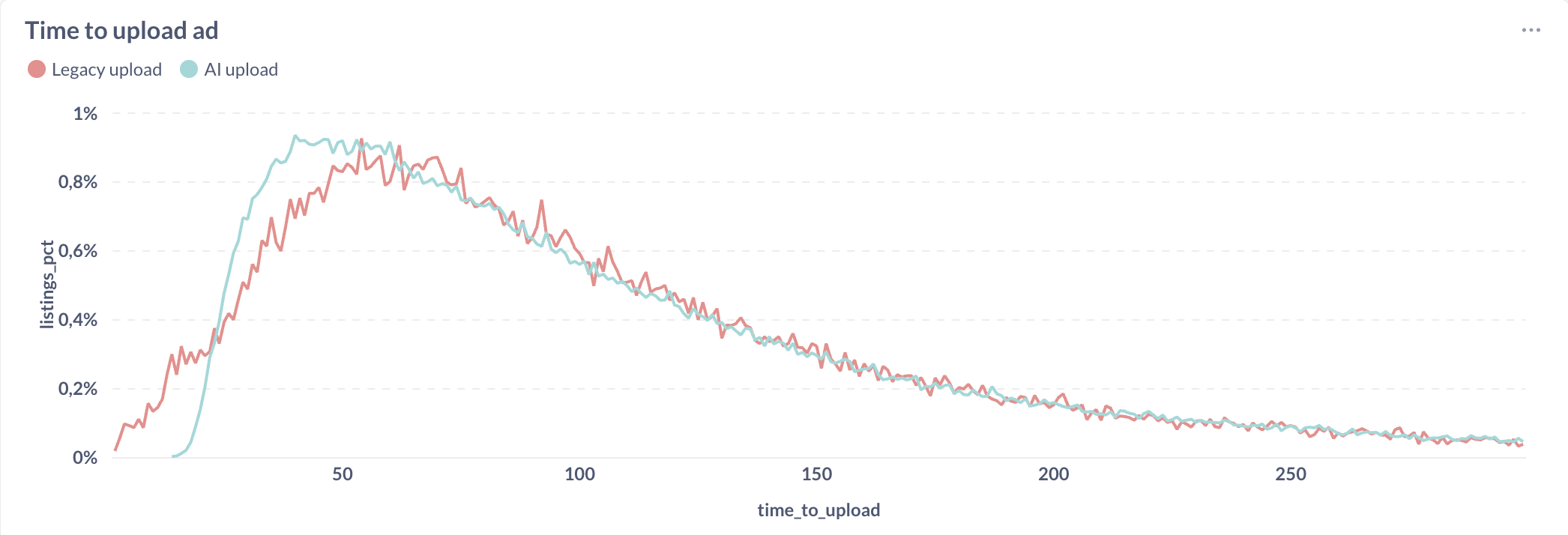
Technically, AI takes a few extra seconds to analyse images, but in practice, users save time.
They don’t have to write title, description or choose colour manually.
With AI: 35–60 seconds per listing
Without AI: 45–75 seconds per listing
On average, users save 10–15 seconds per listing.
For someone who often uploads several items in a row, this becomes a noticeable time saving – and more listings in circulation.
Learnings & next steps
This project gave me valuable experience designing AI-driven user flows, where the balance between automation and control is crucial.
I also learned the importance of transparency, iterative testing and releasing early to be able to learn.
We’re now working on AI-based pricing and a new image picker based on these insights.